Remembrance, Justice, and the Future of the Armenian People
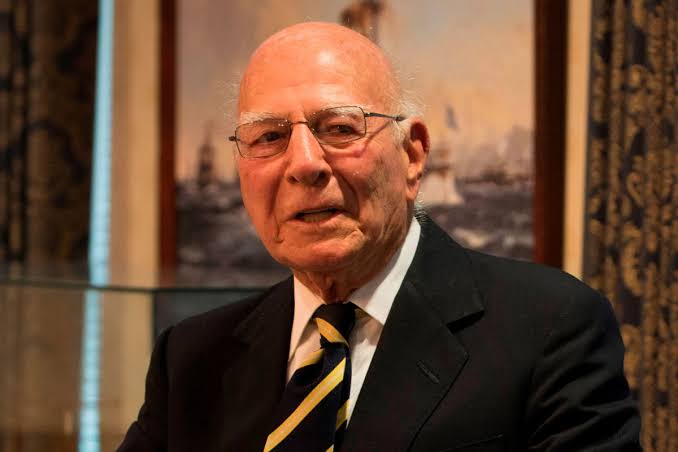
Keynote Speech by Roupen Avsharian, Esq. at the 111th Anniversary Commemoration of the Armenian Genocide organized by the United Armenian Genocide Commemoration Committee, at the Armenian Genocide Martyrs’ Memorial in Montebello, California.
April 24, 2026
His Eminence Archbishop Hovnan Derderian, Primate of the Western Diocese of the Armenian Church of North America
His Eminence Archbishop Kegham Khatcherian, Primate of the Western Prelacy of the Armenian Apostolic Church America
His Eminence Bishop Parsegh Baghdassarian, Auxiliary Bishop of the Armenian Eparchy of USA and Canada
Very Reverend Henrik Shahnazarian, Minister of Armenian Evangelical Union of North America
The Honorable Anna Avedisyan, Consul General of the Republic of Armenia in Los Angeles,
Reverend Fathers, Public Officials, Representatives of community political, social, cultural, athletic and civic organizations,
Ladies and Gentlemen:
Today we gather here with heavy hearts but unbroken spirit to honor the memory of the 1.5 million Armenians who were systematically murdered or killed during the Armenian Genocide of 1915. For Armenians around the world, April 24 is not only a date on the calendar—it is a solemn reminder of our shared history, our enduring pain, and our unwavering commitment to truth and justice.
We stand here not simply to mourn those who perished, but to give voice to the silenced, to remember the families torn apart, the villages emptied, the culture nearly erased. Their stories—our ancestors’ stories—are carried within us. Every prayer we say, every candle we light, every moment of silence we hold, is a testament that their memory lives on.
But remembrance alone is not enough. The Armenian Genocide is not just a chapter in Armenian history—it is a chapter in human history. And when crimes against humanity are denied, minimized, or forgotten, the door is opened for them to happen again. As survivors have said for generations: “If we forget, we allow repetition.”
That is why our presence here today matters. It matters for the truth. It matters for justice. And it matters for future generations who look to us to safeguard history with honesty and courage.
On the night of April 24th, the Ottoman Turkish government carried out the first step of that plan. They compiled lists of Armenian political leaders—writers, clergy, teachers, professionals, members of parliament—those who gave the Armenian community its spirit and direction. And then, in a coordinated strike, they arrested over 270 Armenian intellectuals and community leaders in Constantinople. Within days, that number exceeded 600.
They were deported into the interior of the empire—most never to return. They were tortured, executed, or left to die in prison and exile. By removing the intellectual and cultural leadership of the Armenian people, the Ottoman state believed it could silence the identity of an entire nation.
But April 24 was only the beginning. What followed was mass deportations, forced marches into the Syrian desert, starvation, rape, slavery, and organized mass murder. Caravans of women, children, and the elderly were driven toward the desert of Der El Zor. By 1923, 1.5 million Armenians had been killed. The Armenian churches were desecrated, the villages emptied, the cultural heritage of millennia uprooted.
This truth is not new. It was documented as it was happening, witnessed by those who had the courage to speak up when the world was silent. One of these brave voices was Ambassador Henry Morgenthau, the U.S. Ambassador to the Ottoman Empire. He saw the deportations, he witnessed the massacres, the starvation, the death marches. He confronted the Ottoman leaders. Ambassador Morgenthau reported the truth to Washington and to the world.
This was not a tragedy of war. It was not chaos. It was genocide—the deliberate, planned destruction of a people. A crime that later inspired the very word genocide, coined by Raphael Lemkin, who studied the Armenian case as its defining example.
Lemkin explicitly said that the Armenian Genocide was one of the events that compelled him to create the very concept and advocate tirelessly for the UN Genocide Convention. He understood that the crimes committed against the Armenians were not only a national tragedy but a universal warning—a blueprint of what happens when a people is targeted with intent to destroy.
April 24, 1915 shattered families. It shattered an entire civilization. But it did not break the Armenian spirit. The Armenian Genocide is not an opinion. It is documented history. It is a moral truth. It is a crime that demands recognition, restitution, and remembrance.
As we stand here, we honor the extraordinary resilience of the Armenian people. Despite the unimaginable horrors of 1915, Armenians not only survived—they rebuilt, they created, they contributed, they flourished. The survival of our culture, our language, our faith, and our identity itself is a victory over those who tried to destroy us.
As we remember the past, we must also recognize the challenges facing Armenians today—from threats to the homeland, to the suffering in Artsakh, to the global struggle for recognition and justice. The lessons of 1915 demand that we stand united, raise our voices, and ensure that our people—wherever they are—live in safety, dignity, and freedom.
The United States, after decades of activism by Armenian Americans and our allies, has finally spoken with moral clarity. The U.S. Congress recognized the Armenian Genocide in 2019, and in 2021, the President of the United States became the first sitting president to officially call it by its rightful name: genocide.
This was not merely a symbolic act. It was a moral imperative. It affirmed that truth matters, that history cannot be negotiated, and that justice cannot be indefinitely delayed.
But recognition is only the beginning. Genocide recognition must lead to restitution and reparation. Recognition acknowledges what happened; restitution seeks to repair what was taken—the land, the property, the culture, the inheritance that a nation was robbed of. And reparation is not only monetary—it is the restoration of dignity, the affirmation that the crime is neither forgotten nor forgiven by the passage of time.
As we reflect on the tragedies of our past, we cannot ignore the injustices of our present. The wounds of 1915 feel painfully familiar when we look at what has happened to our brothers and sisters from Artsakh, and to the Armenians who continue to suffer today.
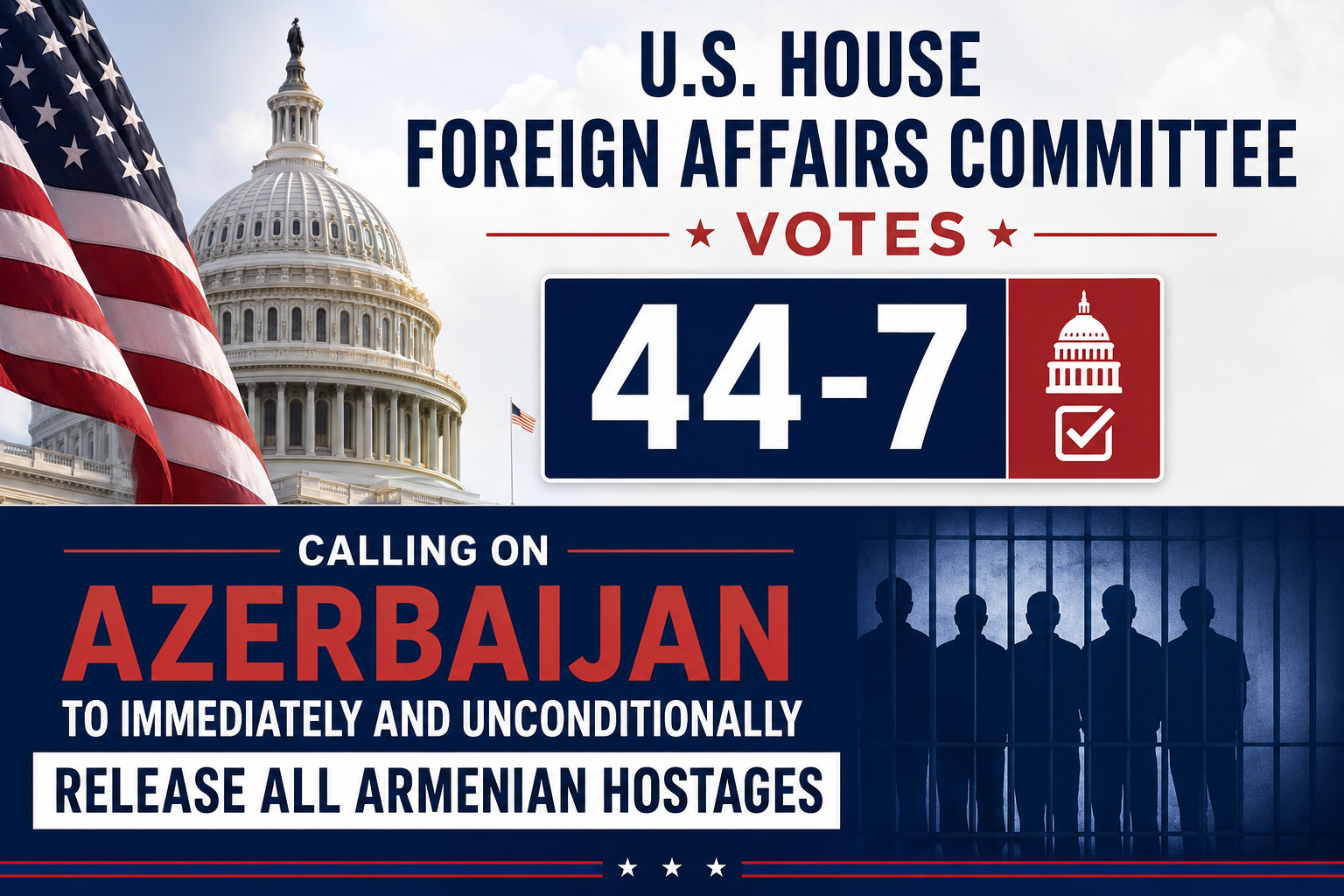
Even now, Armenian political prisoners are being held in Azerbaijan, subjected to unlawful detention, isolation, and mistreatment—simply for being Armenian, for defending their homeland, or for fulfilling their public duties. These men are not criminals. They are hostages—held in violation of international law, human rights conventions, and basic human decency.
The forced depopulation of Artsakh (Nagorno-Karabakh) in 2023 was not an isolated event—it was the culmination of years of blockade, starvation tactics, and systematic pressure designed to empty the region of its Armenian population. This was ethnic cleansing. And it must be recognized as such.
But today, we affirm something fundamental: the Armenians of Artsakh have a right of return—a right protected under international law, under the principles of human rights, and under the moral obligation of the world to defend displaced peoples.
Our struggle for recognition is not only about the past—it is also about the living. It is about ensuring that Armenians can live safely on their ancestral lands without fear of persecution. It is about ensuring that every Armenian child, whether born in Stepanakert or Los Angeles, knows that justice is not just a dream—it is a responsibility.
Here in the diaspora, whether in Los Angeles, London, Paris, Beirut, Sydney, or anywhere else, we are the guardians of memory. We do more than mourn; we educate, we advocate, we build.
For decades, the Armenian voice in Washington has fought tirelessly for justice, memory, and recognition. And that work mattered. The recognition of the Armenian Genocide was not just symbolic—it was moral truth affirmed on the world stage.
But today, we face a different reality. Armenia is no longer only fighting for recognition of its past. It is fighting for the security of its present—and the survival of its future.
So, the question before us is simple: what must the new generation of Armenian Americans do next in the Diaspora, in general, and Washington, D.C., in particular?
First, they must shift their focus from symbolism to security. Statements and resolutions are no longer enough. Armenia needs tangible partnerships—defense cooperation, intelligence sharing, and deeper engagement with institutions. The goal is not escalation, but deterrence.
Second, we must demand accountability in our region. The lessons of the Nagorno-Karabakh conflict and the displacement of Armenians from Artsakh are clear: without consequences, aggression will repeat itself. The Armenian American lobby must advocate for targeted sanctions, enforcement of U.S. laws, and international investigations into human rights violations.
Third, we must build broader coalitions. Armenian issues cannot stand alone—they must stand alongside global causes: democracy, human rights, and religious freedom. By partnering with other communities and institutions, we amplify not just our voice, but our influence.
Fourth, the young Armenian American generation must present Armenia as what it truly is: a democratic partner in a difficult neighborhood. Armenia has always shown a commitment to reform and democratic values. This is not just a moral asset—it is a strategic one. And it must be recognized as such in Washington.
Fifth, we must look beyond aid—and toward economic strength. A secure Armenia is a resilient Armenia. That means investment, innovation, and integration into global markets. The Armenian American lobby should champion Armenia not just as a nation in need, but as a nation of opportunity.
Sixth, we must refine our strategy. Advocacy cannot be reactive. It must be proactive, professional, and bipartisan. Influence in Washington is built not only in Congress, but within the policymaking institutions that shape long-term strategy.
Therefore, let us commit ourselves to defending the truth of the Armenian Genocide, supporting Armenia and the right of return of Artsakh Armenians, protecting Armenian identity and culture, standing against all genocides anywhere in the world, and teaching our children not only what happened, but what must never happen again.
Today we bow our heads in grief, but we raise our voices in unity. We stand as one people, across continents and generations, carrying a legacy that no empire, no government, no act of violence could destroy.
May the memory of the martyrs of the Armenian Genocide be eternal. May their courage inspire us. May their spirit guide us. And may we honor them not only with remembrance, but with action, unity, and unwavering commitment to justice.
God bless the Armenian people.